
When trying to identify ringworm in dogs, reading descriptions alone often isn’t enough. Most pet owners turn to images to answer a simple question: what does it actually look like in real life?
This guide focuses entirely on ringworm in dogs pictures, helping you compare real-world examples, understand what you’re seeing, and avoid common misinterpretations. Instead of repeating general explanations, we’ll walk through how to analyze visual patterns, stages, and differences you’ll notice in photos.
If you’re unsure whether your dog’s skin issue matches what you see online, this breakdown will help you make a more informed judgment.
If you want a complete explanation beyond images, you can read our full guide on what does ringworm look like on a dog.
Ringworm in Dogs Pictures (Real Examples You Can Compare)
Looking at multiple images is the fastest way to recognize patterns. However, not all pictures show the same presentation, and that’s where confusion often starts. According to the American Kennel Club (AKC), ringworm in dogs can appear as circular hair loss, scaly skin, and patchy lesions that vary in severity.
Real Ringworm Images from Mild to Severe Cases
In mild cases, images typically show:
- Small patches of thinning fur
- Slightly rough or dry skin
- Minimal redness
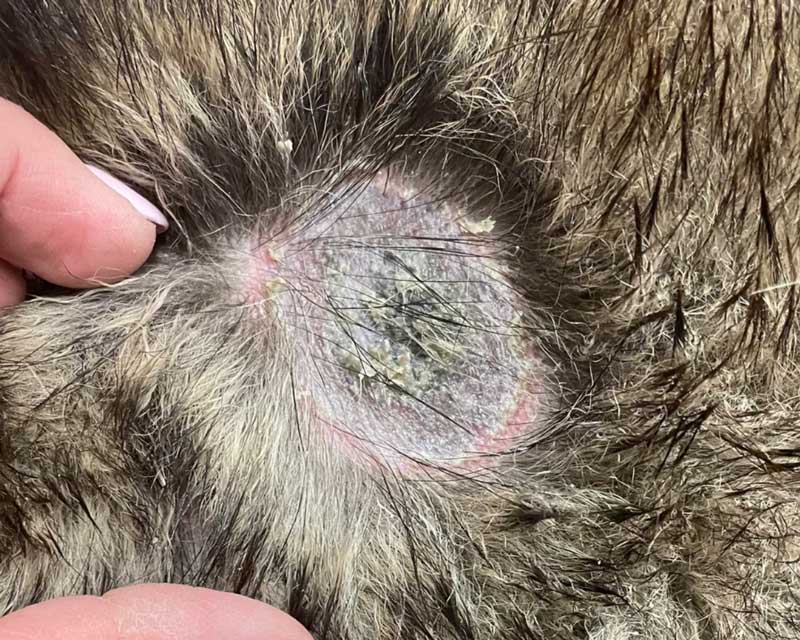
As the condition becomes more noticeable, photos reveal:
- Clear bald spots
- Defined edges around lesions
- Flaky or crusty skin texture
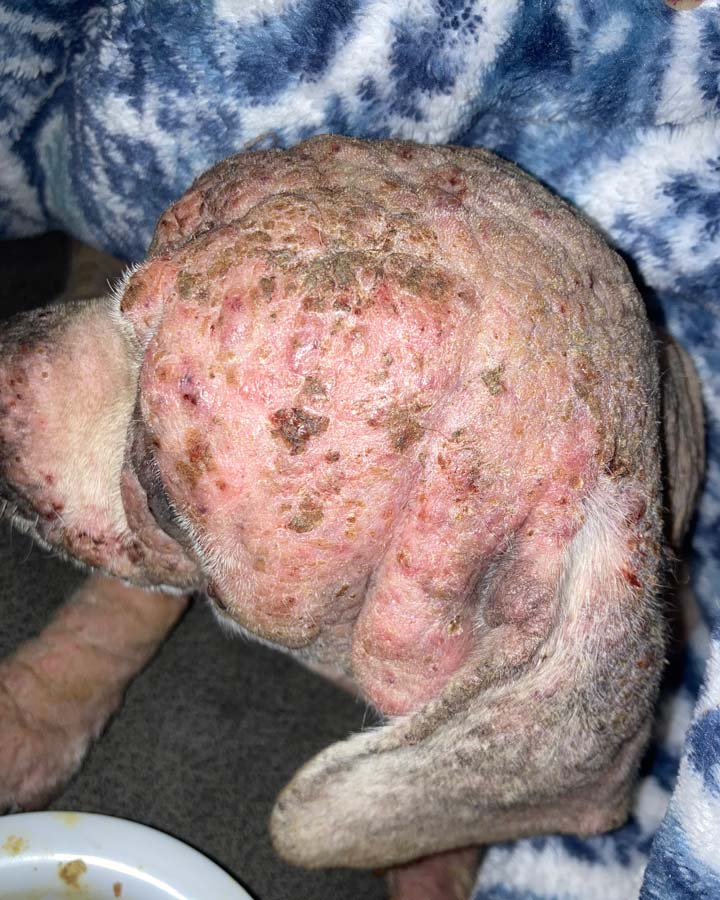
In more severe examples, images may include:
- Large, expanding patches
- Multiple affected areas
- Visible irritation or inflammation
Comparing these variations helps you understand that ringworm doesn’t always look dramatic at first.
Close Up vs Full Body Ringworm Photos
Close up images highlight details like:
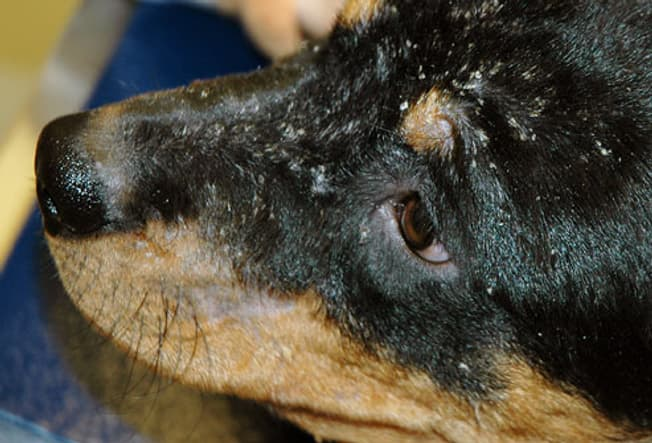
- Skin texture (dry, flaky, scaly)
- Broken hair shafts
- Fine crusting
Full body photos, on the other hand, show:
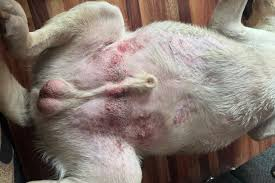
- How far the infection has spread
- Distribution across the body
- Symmetry or randomness of patches
Both perspectives are important. A close-up may confirm texture, while a full-body view helps assess severity.
How Ringworm Appears in Different Lighting Conditions
Lighting plays a surprisingly large role in how ringworm appears in pictures.
- Bright lighting can exaggerate redness and dryness
- Dim lighting may hide early lesions
- Flash photography can make scaling look more intense
Because of this, a lesion might look more severe—or less visible—depending on how the image was taken. Always compare multiple images before drawing conclusions.
Ringworm in Dogs Pictures by Stage
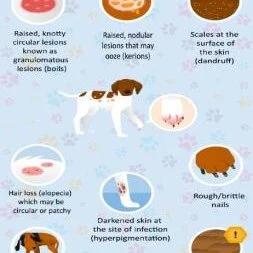
Understanding progression is key. Ringworm doesn’t appear fully developed it evolves over time.
Early Stage Ringworm Images (Subtle Signs)
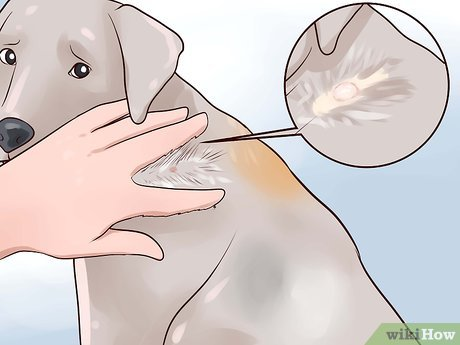
Early-stage images are often the hardest to interpret. You might see:
- Slight hair thinning
- Small, uneven patches
- Barely noticeable dryness
These images are frequently overlooked because they don’t match the “classic” circular expectation.
Mid-Stage Ringworm (Expanding Patches)
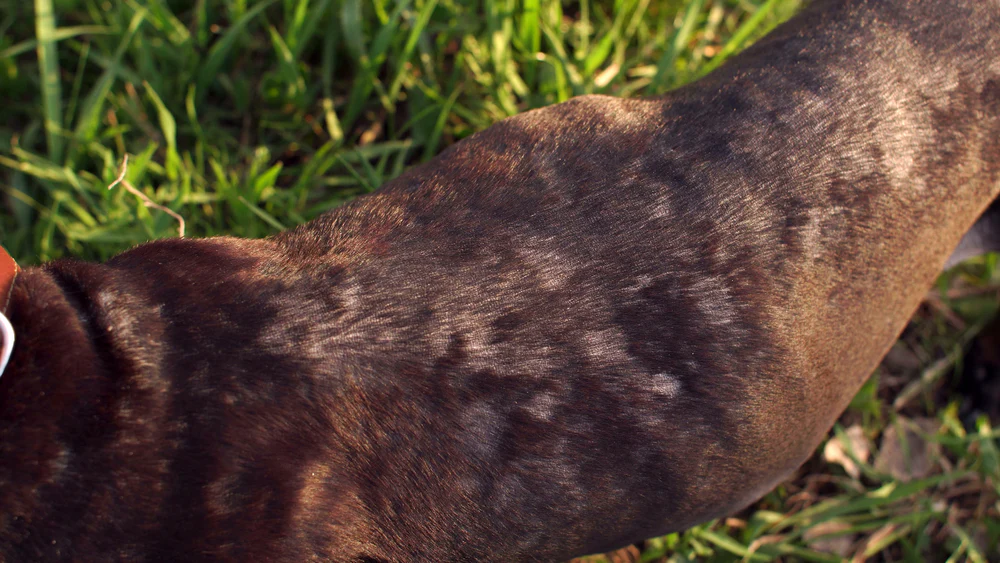
At this stage, pictures become more recognizable:
- Patches grow larger
- Edges become more defined
- Skin appears increasingly dry or flaky
This is when most pet owners begin to suspect something is wrong.
Advanced Ringworm Cases (Severe Skin Damage)
Advanced images show:
- Large areas of hair loss
- Multiple lesions merging together
- Thick crusting or scaling
These cases are easier to identify visually, but they also indicate that the condition has progressed significantly.
How to Identify Ringworm from Pictures
Recognizing ringworm is less about memorizing one image and more about spotting consistent visual patterns.
Key Visual Patterns to Look For
Across most images, common patterns include:
- Patchy hair loss
- Defined lesion borders
- Dry or flaky skin
Even when shapes vary, these core features tend to repeat.
Texture Differences: Dry, Scaly, or Crusty Skin
Texture is one of the most reliable indicators in photos.
- Dry skin: appears dull and rough
- Scaly skin: looks like dandruff or peeling layers
- Crusty areas: show hardened buildup
These textures distinguish ringworm from conditions that look moist or inflamed.
Shape Recognition: Circular vs Irregular Lesions
While ringworm is often associated with circular lesions, images reveal that:
- Some patches are perfectly round
- Others are oval or irregular
- Early lesions may have no clear shape at all
Focusing only on “perfect circles” can lead to missed identification.
Ringworm vs Other Skin Conditions (Picture Comparison)
One of the biggest challenges is distinguishing ringworm from other issues that look similar in photos.
Ringworm vs Mange (Visual Differences)
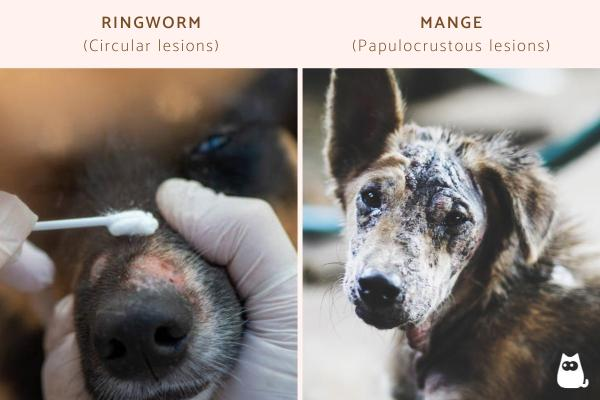
Images of mange often show:
- More widespread hair loss
- Thickened or wrinkled skin
- Less defined lesion edges
Ringworm tends to look more localized and structured.
Ringworm vs Allergies (Redness vs Lesions)
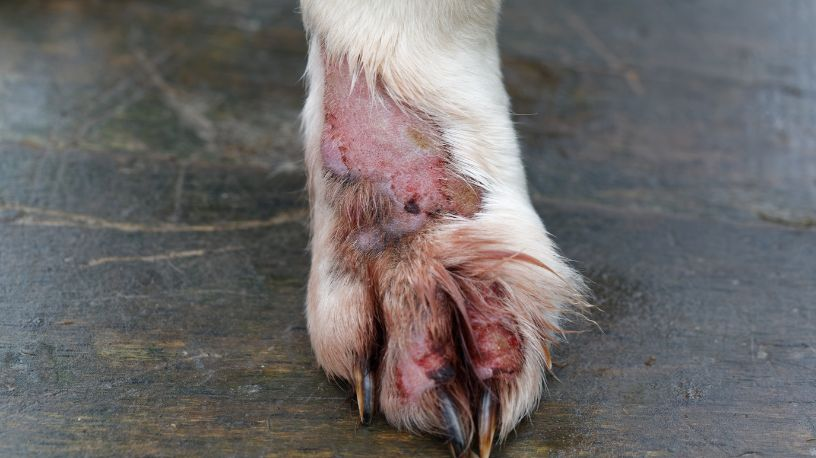
Allergy-related images usually display:
- General redness
- Inflamed skin without clear borders
- No distinct bald patches
Ringworm images, in contrast, show more defined areas of change.
Ringworm vs Hot Spots (Moist vs Dry Appearance)
Hot spots appear very different in pictures:
- Wet, shiny surface
- Intense redness
- Rapid irritation
Ringworm, by comparison, looks dry and controlled rather than moist and aggressive.
Common Mistakes When Looking at Ringworm Pictures
Misinterpretation is common—especially when relying on a single image.
Misidentifying Normal Shedding as Ringworm
Some photos of normal shedding can resemble early ringworm:
- Uneven fur
- Slight thinning
- No actual skin damage
Without visible skin changes, it’s often not ringworm.
Confusing Dirt or Scabs with Infection
Dirt, dried mud, or healing scabs can look similar in pictures.
Key difference:
- Dirt sits on the surface
- Ringworm affects the skin underneath
Zoomed-in images can help clarify this.
Overlooking Early Subtle Signs
Many people ignore early-stage images because they seem too mild.
But subtle signs—like slight dryness or small patches—are often the first visual clues.
Missing these early signs can delay proper action.
Why Ringworm Pictures Can Look Different
Not all dogs—and not all photos—are the same. Several factors influence how ringworm appears.
Coat Type and Fur Thickness
Dogs with thick coats may:
- Hide early lesions
- Show delayed visible symptoms
Short-haired dogs, however, display changes more clearly in pictures.
Skin Color and Breed Variations
Skin tone affects visibility:
- Lighter skin may show redness more easily
- Darker skin may highlight scaling instead
Breed differences also impact how lesions appear and spread.
Camera Angle and Image Quality
Photo quality can change perception:
- Blurry images hide texture
- Angled shots distort shape
- Low resolution reduces detail
Always rely on multiple clear images when comparing.
When Pictures Are Not Enough
While images are helpful, they have limitations.
Limits of Visual Identification
Even experienced pet owners can misinterpret photos.
Why?
- Many skin conditions look similar
- Lighting and quality affect accuracy
- Early stages are subtle
Pictures should guide—not confirm—your judgment.
When to Confirm with a Veterinarian
If you notice:
- Spreading patches
- Multiple affected areas
- Unclear or conflicting visual signs
It’s best to seek professional evaluation.
Images can raise suspicion, but only proper testing can confirm the diagnosis.
Frequently Asked Questions About Ringworm in Dogs Pictures
What does ringworm look like on a dog in pictures?
Ringworm in dogs usually appears as circular or irregular patches of hair loss with dry, scaly, or crusty skin. In pictures, it may look different depending on the stage and lighting, but the most common signs include bald spots and flaky texture.
Can you identify ringworm in dogs just from pictures?
Pictures can help you recognize possible signs of ringworm, but they are not enough for a confirmed diagnosis. Many skin conditions look similar, so a veterinarian is needed for accurate testing.
Why does ringworm look different in every picture?
Ringworm can look different due to factors like lighting, camera angle, fur thickness, skin color, and the stage of infection. This is why comparing multiple images is important.
What do early ringworm pictures look like on dogs?
Early-stage ringworm images often show small patches of thinning hair, mild dryness, and very subtle skin changes. These signs are easy to miss because they don’t always form clear circular shapes.
How do I tell the difference between ringworm and other skin issues in pictures?
Ringworm usually looks dry, scaly, and patchy with defined edges. In contrast, hot spots appear wet and inflamed, while allergies often cause general redness without clear bald patches.
Do all ringworm pictures show circular lesions?
No, not all ringworm cases appear as perfect circles. Some images show irregular or uneven patches, especially in early stages or in dogs with thick fur.
Are ringworm pictures reliable for self-diagnosis?
Ringworm pictures are helpful for comparison, but they should not be used for self-diagnosis. Visual similarities with other conditions can lead to mistakes without proper testing.
When should I stop comparing pictures and see a vet?
You should consult a vet if the patches are spreading, worsening, or not clearly identifiable through images. Early diagnosis helps prevent the infection from spreading further.
Final Thoughts
Ringworm in dogs doesn’t have just one look—and that’s why pictures are so important.
By comparing multiple images, focusing on texture and patterns, and understanding how appearance changes over time, you can get much closer to identifying what’s happening on your dog’s skin.
Still, no image can replace a proper diagnosis. Use pictures as a guide, not a final answer.
The more examples you study, the easier it becomes to recognize the subtle differences that matter.