
Ringworm in dogs is one of the most misunderstood skin conditions. Despite its name, it’s not caused by a worm—it’s actually a fungal infection that affects a dog’s skin, hair, and sometimes nails.
If you’ve noticed unusual patches, hair loss, or flaky skin on your dog, you might be wondering: what does ringworm look like on a dog? The answer isn’t always straightforward. Ringworm can appear differently depending on the stage of infection, the dog’s immune system, and even the area of the body affected.
This guide will walk you through the typical appearance, symptoms, causes, and diagnosis of ringworm, so you can identify it early and take the right action.
What Does Ringworm Look Like on a Dog?
According to the American Kennel Club (AKC), ringworm is a common fungal infection affecting a dog’s skin, hair, and nails.
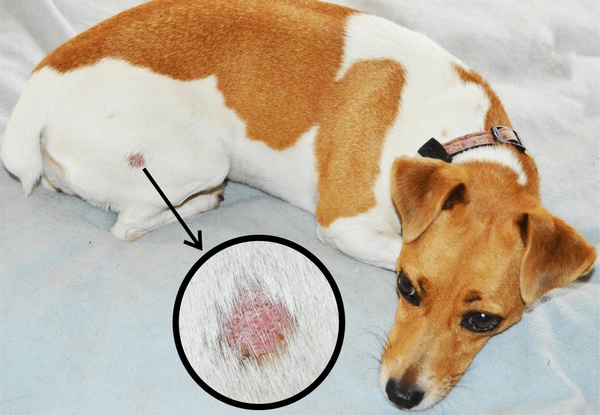
Ringworm usually appears as a circular or irregular patch of hair loss with visible skin changes. While many people expect a perfect “ring,” the reality is often more subtle or inconsistent.
Typical Appearance of Ringworm Lesions
In most cases, ringworm lesions start small and gradually expand outward. The classic signs include:
- Circular patches of hair loss
- Dry, scaly, or flaky skin
- Red or slightly inflamed edges
- A center that may begin to heal while the outer edge spreads
However, not every case forms a perfect circle. Some lesions look patchy, uneven, or diffuse—especially in the early stages.
Early vs Advanced Signs You Should Notice
In the early stage, ringworm can be easy to miss. You might notice:
- Slight thinning of fur
- Small areas of dry or rough skin
- Minimal redness
As the infection progresses, the symptoms become more obvious:
- Larger bald patches
- Crusting or scabbing
- More defined lesion borders
- Increased spread across the body
Dogs with weaker immune systems (like puppies or senior dogs) often show faster progression.
How Ringworm Differs from Other Skin Conditions
Ringworm is commonly confused with other skin issues, including allergies, mange, or bacterial infections.
Here’s how it stands out:
- Circular pattern (though not always perfect)
- Dry, scaly texture, not moist or oozing
- Hair breaks off easily, rather than falling out completely at first
Unlike flea allergies, ringworm doesn’t always cause intense itching. And unlike mange, it typically doesn’t create thickened, wrinkled skin.
Common Symptoms of Ringworm in Dogs
While appearance is important, recognizing the full set of symptoms helps confirm your suspicion.
Hair Loss and Circular Bald Patches
Hair loss is one of the earliest and most visible signs. It usually starts in small patches and gradually expands.
Instead of shedding from the root, the hair often breaks off near the skin, leaving a rough, stubbly texture.
Redness, Scaling, and Crusty Skin
Ringworm affects the outer layer of the skin, leading to:
- Flaky or dandruff-like scaling
- Mild redness or irritation
- Crusty buildup in some cases
The skin may look dry and rough rather than inflamed and wet.
Itching and Behavioral Changes
Not all dogs with ringworm itch—but some do.
If itching occurs, you might notice:
- Frequent scratching or licking
- Rubbing against furniture
- Restlessness or irritation
Excessive scratching can worsen the lesions and spread the infection.
Where Ringworm Commonly Appears on Dogs
Ringworm can develop anywhere on a dog’s body, but some areas are more prone due to exposure, moisture, or thinner fur.
(This section serves as a general overview. For detailed visual guides, check the linked articles for each body part.)
Face, Ears, and Nose Areas
These areas are often affected first because they frequently come into contact with contaminated surfaces, other animals, or the environment.
Lesions here may appear more visible due to thinner fur and sensitive skin.
Belly and Skin Folds
The belly and inner body areas are more vulnerable because:
- The skin is thinner
- There is less hair coverage
- Moisture can build up easily
This can make symptoms appear more quickly and spread faster.
Tail and Head Regions
The tail and head are also common locations, especially if the dog is exposed to contaminated bedding or grooming tools.
Movement and contact can contribute to the spread in these areas.
What Causes Ringworm in Dogs?
Understanding the cause helps you prevent reinfection and protect other pets—and even yourself.
Fungal Infection Explained
Ringworm is caused by a group of fungi called dermatophytes. These fungi feed on keratin, a protein found in:
- Hair
- Skin
- Nails
They live on the surface rather than deep inside the body.
How Dogs Get Ringworm
Dogs typically contract ringworm through:
- Direct contact with an infected animal
- Contact with contaminated objects (bedding, brushes, toys)
- Exposure to fungal spores in the environment
The spores are highly resilient and can survive for months in certain conditions.
Is Ringworm Contagious to Humans and Pets?
Yes—ringworm is zoonotic, meaning it can spread between animals and humans.
People at higher risk include:
- Children
- Elderly individuals
- Those with weakened immune systems
This is why early detection and treatment are critical.
How to Confirm Ringworm in Dogs
While visual signs are helpful, they’re not always enough for a definitive diagnosis.
Visual Identification vs Veterinary Diagnosis
You might suspect ringworm based on appearance, but other conditions can look very similar.
A veterinarian can confirm the diagnosis and rule out:
- Mange
- Allergies
- Bacterial infections
Self-diagnosis alone can lead to incorrect treatment.
Tests Vets Use (Wood’s Lamp, Culture, PCR)
Veterinarians may use several diagnostic tools:
- Wood’s Lamp: A special ultraviolet light that can make some fungal infections glow
- Fungal Culture: A lab test that confirms the presence of dermatophytes
- PCR Testing: A more advanced method that detects fungal DNA
These tests provide accuracy and guide proper treatment.
When to See a Vet
Not every skin issue requires urgent care—but ringworm should be taken seriously.
Signs That Require Immediate Attention
You should consult a vet if:
- Lesions are spreading rapidly
- Multiple areas are affected
- Your dog is very young, old, or immunocompromised
- Other pets or humans are showing symptoms
Early treatment reduces the risk of widespread infection.
Risks of Leaving Ringworm Untreated
Ignoring ringworm can lead to:
- Larger, more severe lesions
- Infection spreading to other pets
- Transmission to humans
- Longer recovery time
Even mild cases can escalate if not properly managed.
Quick Overview Before You Check Specific Body Areas
Before diving into detailed guides for each body part, it’s important to understand why ringworm doesn’t always look the same everywhere.
Why Ringworm Looks Different Depending on Location
The appearance of ringworm varies based on:
- Skin thickness
- Hair density
- Moisture levels
- Exposure to friction or contact
For example, areas with less fur may show redness more clearly, while thicker-coated areas may hide early symptoms.
FAQ
1. Does ringworm always look like a perfect circle?
No. While circular lesions are common, many cases appear irregular or patchy, especially in early stages.
2. Can ringworm go away on its own?
Some mild cases may improve, but most require treatment to fully eliminate the fungus and prevent spread.
3. How long does ringworm last in dogs?
With treatment, it usually clears within a few weeks. Without treatment, it can last much longer.
4. Is ringworm painful for dogs?
It’s usually not painful, but it can cause discomfort, itching, and irritation.
5. Can indoor dogs get ringworm?
Yes. Even indoor dogs can be exposed through contaminated objects or human contact.
Final Thoughts
So, what does ringworm look like on a dog?
In most cases, it appears as circular patches of hair loss with dry, scaly skin, but the exact look can vary widely. Some dogs show subtle signs, while others develop more obvious lesions.
The key is early recognition. The sooner you identify unusual skin changes, the easier it is to treat the infection and prevent it from spreading.
If you’re unsure, don’t rely on guesswork—consult a veterinarian for proper diagnosis and treatment.